Buy korrektur.eu ?
We are moving the project
korrektur.eu .
Are you interested in purchasing the domain
korrektur.eu ?
domain@kv-gmbh.de · 0541-91531010
Buy korrektur.eu ?
What is photosynthesis?
Photosynthesis is the process by which green plants, algae, and some bacteria convert light energy, usually from the sun, into chemical energy stored in glucose molecules. This process involves the absorption of carbon dioxide and water, which are then converted into glucose and oxygen with the help of chlorophyll and other enzymes. Photosynthesis is crucial for the survival of plants and other organisms that depend on them for food and oxygen. **
When does photosynthesis occur?
Photosynthesis occurs during the daytime when there is sunlight available. This is because sunlight is the energy source that drives the process of photosynthesis. During photosynthesis, plants use sunlight, carbon dioxide, and water to produce glucose and oxygen. This process is essential for the survival of plants and is the foundation of the food chain, as it provides energy for all living organisms. **


Similar search terms for Photosynthesis
Top-Angebote
Products related to Photosynthesis:
-
Letts (HarperCollins) Letts GCSE 9-1 Combined Science Foundation Complete Revision & Practice - Paperback Revision Guide & Workbook - Ages 14-16 - Edexcel AQA OCR GatewayThis all-in-one revision guide and practice workbook is designed to help GCSE students tackle the Combined Science Foundation tier with confidence. Covering Biology, Chemistry, and Physics in a single, exam-focused volume, it combines clear topic-by-topic notes with hands-on practice questions. Matched closely to the National Curriculum and suitable for Edexcel, AQA, and OCR Gateway exam boards, it is an essential companion for anyone working towards their 9-1 Combined Science GCSE. Letts GCSE 9-1 Combined Science Foundation Complete Revision & Practice brings together everything a student needs to revise effectively for their final exams. The book is laid out in a lively, magazine-style format that breaks topics down into manageable, accessible chunks rather than overwhelming walls of text, helping to keep motivation high throughout a long revision period. Product Details: Condition: Brand New Format: Paperback ISBN: 9780008161101 Publisher: Letts (HarperCollins) Age Range: 14-16 years (GCSE)5,99 £*Shipping: 2,99 £Secure redirect to the provider
-
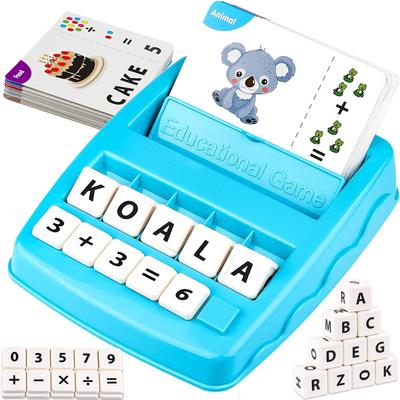
JoyToys Matching Letter Game And Early Learning Toy For Kids With Spelling And Math Activities Matching Letter Game And Early Learning Toy For Kids With Spelling And Math ActivitiesUnlock your child's love for learning through play with this engaging preschool learning toy. Designed for curious toddlers and preschoolers, this 2in1 educational game combines letter matching, spelling practice, and early math challenges in one...47,97 $*Shipping: 0,00 $Secure redirect to the provider
-
Useful Little Things English Spelling Board Game Alphabet Word Building Learning Toy bellTurn learning into an exciting game with this English Spelling Board Game. Designed for 2 to 4 players, this educational word building game encourages children to practice spelling, expand vocabulary, and strengthen language skills through engaging...29,97 $*Shipping: 0,00 $Secure redirect to the provider
-
MGA Entertainment Little Tikes 100 Words Spell ; Spin Pencil - 3+ yrs - Interactive Spelling ToyInteractive spelling toy with audio feedback for children aged 3 years and over. Includes a pencil-shaped spinner with illustrated spelling notebook and 100 words activities.24,38 £*Shipping: 3,95 £Secure redirect to the provider


-
Can humans perform photosynthesis?
No, humans cannot perform photosynthesis. Photosynthesis is a process carried out by plants, algae, and some bacteria, where they convert sunlight into energy to produce their own food. Humans do not have the necessary organelles, such as chloroplasts, to carry out photosynthesis. Instead, humans obtain energy by consuming food and breaking it down through cellular respiration. **
-
Can you describe photosynthesis?
Photosynthesis is the process by which green plants, algae, and some bacteria convert light energy, carbon dioxide, and water into glucose and oxygen. It takes place in the chloroplasts of plant cells and involves two main stages: the light-dependent reactions and the light-independent reactions (Calvin cycle). During the light-dependent reactions, light energy is used to split water molecules and produce ATP and NADPH. These energy carriers are then used in the Calvin cycle to convert carbon dioxide into glucose. Overall, photosynthesis is a crucial process that provides energy for plants and produces oxygen as a byproduct. **
-
Could photosynthesis even work?
Yes, photosynthesis is a fundamental process that allows plants, algae, and some bacteria to convert light energy into chemical energy in the form of glucose. This process involves the absorption of light by chlorophyll, which then drives a series of chemical reactions that ultimately produce glucose and release oxygen as a byproduct. Photosynthesis is essential for the survival of most life on Earth, as it provides the energy and oxygen necessary for the functioning of ecosystems. Without photosynthesis, the Earth's atmosphere would lack oxygen and the food web would collapse. **
-
Does every plant perform photosynthesis?
No, not every plant performs photosynthesis. While the majority of plants are autotrophic and capable of photosynthesis, there are some exceptions. For example, certain parasitic plants obtain nutrients from other plants and do not perform photosynthesis. Additionally, some plants that live in very dark environments, such as deep in the ocean or underground, may not rely solely on photosynthesis for their energy needs. **


Is there evidence for photosynthesis?
Yes, there is abundant evidence for photosynthesis. Scientists have conducted numerous experiments that demonstrate the process of photosynthesis, including measuring oxygen production, carbon dioxide uptake, and the conversion of light energy into chemical energy. Additionally, the discovery of chlorophyll, the pigment responsible for capturing light energy in plants, further supports the existence of photosynthesis. The overall understanding of how plants and other photosynthetic organisms convert sunlight into energy is well-established and widely accepted in the scientific community. **
When is photosynthesis coming up?
Photosynthesis typically occurs during the daytime when there is sunlight available for plants to convert into energy. It is a continuous process that happens throughout the day whenever there is light. However, the peak time for photosynthesis is usually in the late morning to early afternoon when the sunlight is the strongest. **
Top-Angebote
Products related to Photosynthesis:
-
DK Help Your Kids with English Ages 10–16 – KS3 & KS4 Grammar, Writing & Revision GuideIf English is sounding like a foreign language, make it easy and effortless with the ultimate study guide. This visual reference book takes you through all the different parts of the English language, leaving you ready to help your children tackle the trickiest of subjects. Carol Vorderman's unique study aid encourages parents and children to work together as a team to understand and use all aspects of the English language, including grammar, punctuation, and spelling.This latest title in the best-selling Help Your Kids series combines pictures, diagrams, instructions, and examples to cover the components of the school syllabus, while building knowledge, boosting confidence, and aiding understanding. With your support, children can overcome the challenges of English, leaving them calm, confident, and exam ready.9,99 £*Shipping: 2,99 £Secure redirect to the provider
-
Uplift Essentials 4 Pack Cute Cat Erasable Gel Pen Set 0.5mm Precision Blue Ink For Effortless Writing & Editing 4 Pack Cute Cat Erasable Gel Pen Set 0.5mm Precision Blue Ink For Effortless Writing & Editing"Combine the magic of errorfree writing with the irresistible charm of ""Kawaii"" design. This 4pack of cute cat erasable gel pens is the ultimate solution for students and professionals who demand a tidy, mistakefree page. Featuring advanced..."37,97 $*Shipping: 0,00 $Secure redirect to the provider
-
Letts (HarperCollins) Letts GCSE 9-1 Combined Science Foundation Complete Revision & Practice - Paperback Revision Guide & Workbook - Ages 14-16 - Edexcel AQA OCR GatewayThis all-in-one revision guide and practice workbook is designed to help GCSE students tackle the Combined Science Foundation tier with confidence. Covering Biology, Chemistry, and Physics in a single, exam-focused volume, it combines clear topic-by-topic notes with hands-on practice questions. Matched closely to the National Curriculum and suitable for Edexcel, AQA, and OCR Gateway exam boards, it is an essential companion for anyone working towards their 9-1 Combined Science GCSE. Letts GCSE 9-1 Combined Science Foundation Complete Revision & Practice brings together everything a student needs to revise effectively for their final exams. The book is laid out in a lively, magazine-style format that breaks topics down into manageable, accessible chunks rather than overwhelming walls of text, helping to keep motivation high throughout a long revision period. Product Details: Condition: Brand New Format: Paperback ISBN: 9780008161101 Publisher: Letts (HarperCollins) Age Range: 14-16 years (GCSE)5,99 £*Shipping: 2,99 £Secure redirect to the provider
-
JoyToys Matching Letter Game And Early Learning Toy For Kids With Spelling And Math Activities Matching Letter Game And Early Learning Toy For Kids With Spelling And Math ActivitiesUnlock your child's love for learning through play with this engaging preschool learning toy. Designed for curious toddlers and preschoolers, this 2in1 educational game combines letter matching, spelling practice, and early math challenges in one...47,97 $*Shipping: 0,00 $Secure redirect to the provider
-
What is photosynthesis?
Photosynthesis is the process by which green plants, algae, and some bacteria convert light energy, usually from the sun, into chemical energy stored in glucose molecules. This process involves the absorption of carbon dioxide and water, which are then converted into glucose and oxygen with the help of chlorophyll and other enzymes. Photosynthesis is crucial for the survival of plants and other organisms that depend on them for food and oxygen. **
-
When does photosynthesis occur?
Photosynthesis occurs during the daytime when there is sunlight available. This is because sunlight is the energy source that drives the process of photosynthesis. During photosynthesis, plants use sunlight, carbon dioxide, and water to produce glucose and oxygen. This process is essential for the survival of plants and is the foundation of the food chain, as it provides energy for all living organisms. **
-
Can humans perform photosynthesis?
No, humans cannot perform photosynthesis. Photosynthesis is a process carried out by plants, algae, and some bacteria, where they convert sunlight into energy to produce their own food. Humans do not have the necessary organelles, such as chloroplasts, to carry out photosynthesis. Instead, humans obtain energy by consuming food and breaking it down through cellular respiration. **
-
Can you describe photosynthesis?
Photosynthesis is the process by which green plants, algae, and some bacteria convert light energy, carbon dioxide, and water into glucose and oxygen. It takes place in the chloroplasts of plant cells and involves two main stages: the light-dependent reactions and the light-independent reactions (Calvin cycle). During the light-dependent reactions, light energy is used to split water molecules and produce ATP and NADPH. These energy carriers are then used in the Calvin cycle to convert carbon dioxide into glucose. Overall, photosynthesis is a crucial process that provides energy for plants and produces oxygen as a byproduct. **
Similar search terms for Photosynthesis
-
Useful Little Things English Spelling Board Game Alphabet Word Building Learning Toy bellTurn learning into an exciting game with this English Spelling Board Game. Designed for 2 to 4 players, this educational word building game encourages children to practice spelling, expand vocabulary, and strengthen language skills through engaging...29,97 $*Shipping: 0,00 $Secure redirect to the provider
-
MGA Entertainment Little Tikes 100 Words Spell ; Spin Pencil - 3+ yrs - Interactive Spelling ToyInteractive spelling toy with audio feedback for children aged 3 years and over. Includes a pencil-shaped spinner with illustrated spelling notebook and 100 words activities.24,38 £*Shipping: 3,95 £Secure redirect to the provider
-
Insta360 X4-8K Waterproof 360 Action Camera, 4K Wide-Angle Video, Removable Lens Guards, 135 Min Battery Life, AI Editing, NewThe iiyama ProLite XUB2463HSU-B1 is a high-performance Full HD LED monitor designed to enhance your productivity and viewing experience. With a 24-inch screen size and 1920x1080 resolution, this monitor delivers sharp and clear visuals, perfect for both work and entertainment. The IPS panel ensures consistent color accuracy and wide viewing angles, while the adjustable stand allows for ergonomic positioning to suit your comfort. Whether you're editing photos, working on documents, or streaming content, the iiyama ProLite XUB2463HSU-B1 offers reliable performance and versatility. Key Features: Display: 24-inch Full HD (1920x1080) LED screen for crisp and clear visuals Panel Type: IPS technology for accurate colors and wide viewing angles Connectivity: Multiple input options including HDMI, DisplayPort, and VGA Adjustability: Height-adjustable stand with tilt, swivel, and pivot options for ergonomic comfort Built-in Speakers: Integrated stereo speakers for convenient audio output Design: Slim bezel design for a modern, professional look Eye Care: Flicker-free and blue light reduction features to reduce eye strain during long sessions399,99 £*Shipping: 0,00 £Secure redirect to the provider
-
Could photosynthesis even work?
Yes, photosynthesis is a fundamental process that allows plants, algae, and some bacteria to convert light energy into chemical energy in the form of glucose. This process involves the absorption of light by chlorophyll, which then drives a series of chemical reactions that ultimately produce glucose and release oxygen as a byproduct. Photosynthesis is essential for the survival of most life on Earth, as it provides the energy and oxygen necessary for the functioning of ecosystems. Without photosynthesis, the Earth's atmosphere would lack oxygen and the food web would collapse. **
-
Does every plant perform photosynthesis?
No, not every plant performs photosynthesis. While the majority of plants are autotrophic and capable of photosynthesis, there are some exceptions. For example, certain parasitic plants obtain nutrients from other plants and do not perform photosynthesis. Additionally, some plants that live in very dark environments, such as deep in the ocean or underground, may not rely solely on photosynthesis for their energy needs. **
-
Is there evidence for photosynthesis?
Yes, there is abundant evidence for photosynthesis. Scientists have conducted numerous experiments that demonstrate the process of photosynthesis, including measuring oxygen production, carbon dioxide uptake, and the conversion of light energy into chemical energy. Additionally, the discovery of chlorophyll, the pigment responsible for capturing light energy in plants, further supports the existence of photosynthesis. The overall understanding of how plants and other photosynthetic organisms convert sunlight into energy is well-established and widely accepted in the scientific community. **
-
When is photosynthesis coming up?
Photosynthesis typically occurs during the daytime when there is sunlight available for plants to convert into energy. It is a continuous process that happens throughout the day whenever there is light. However, the peak time for photosynthesis is usually in the late morning to early afternoon when the sunlight is the strongest. **
* All prices are inclusive of VAT and, if applicable, plus shipping costs. The offer information is based on the details provided by the respective shop and is updated through automated processes. Real-time updates do not occur, so deviations can occur in individual cases. ** Note: Parts of this content were created by AI.