Buy korrektur.eu ?
We are moving the project
korrektur.eu .
Are you interested in purchasing the domain
korrektur.eu ?
domain@kv-gmbh.de · 0541-91531010
Buy korrektur.eu ?
What is the difference between a prediction interval and a confidence interval?
A prediction interval is used to estimate the range in which a future observation will fall, taking into account both the variability in the data and the uncertainty in the prediction. On the other hand, a confidence interval is used to estimate the range in which the true population parameter (such as the mean or proportion) will fall, based on a sample of data. In other words, a prediction interval is used for making individual predictions, while a confidence interval is used for estimating population parameters. **
What is the difference between a fluctuation interval and a confidence interval?
A fluctuation interval and a confidence interval are both statistical concepts, but they have different meanings. A fluctuation interval refers to the range within which a variable is expected to fluctuate over time, while a confidence interval refers to the range within which a population parameter is estimated to lie with a certain level of confidence. In other words, a fluctuation interval relates to the variability of a single variable, while a confidence interval relates to the precision of an estimate of a population parameter. **


Similar search terms for Interval
Top-Angebote
Products related to Interval:
-
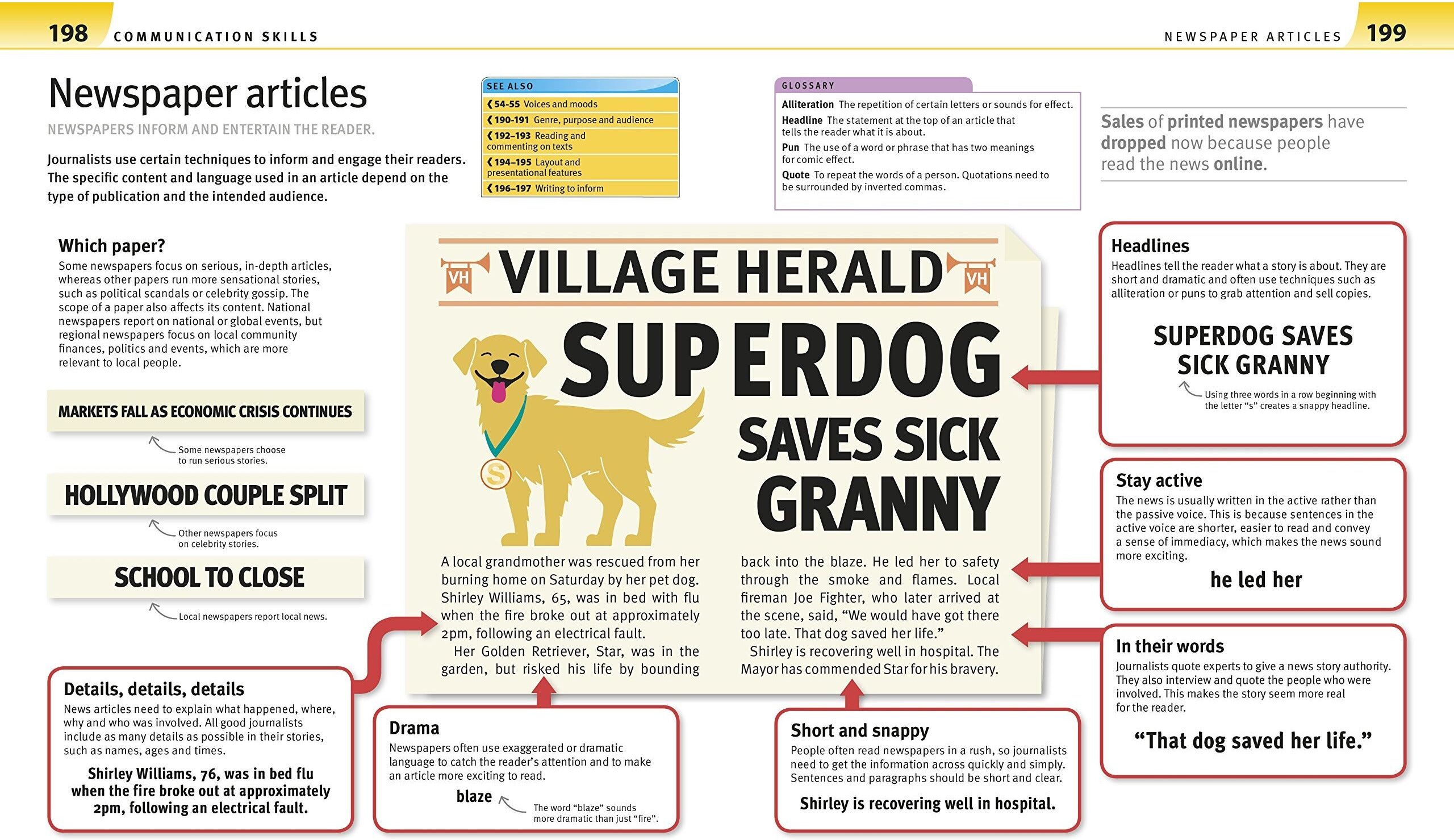
DK Help Your Kids with English Ages 10–16 – KS3 & KS4 Grammar, Writing & Revision GuideIf English is sounding like a foreign language, make it easy and effortless with the ultimate study guide. This visual reference book takes you through all the different parts of the English language, leaving you ready to help your children tackle the trickiest of subjects. Carol Vorderman's unique study aid encourages parents and children to work together as a team to understand and use all aspects of the English language, including grammar, punctuation, and spelling.This latest title in the best-selling Help Your Kids series combines pictures, diagrams, instructions, and examples to cover the components of the school syllabus, while building knowledge, boosting confidence, and aiding understanding. With your support, children can overcome the challenges of English, leaving them calm, confident, and exam ready.9,99 £*Shipping: 2,99 £Secure redirect to the provider
-
CGP Books CGP KS3 Year 7 Workbook Bundle – Ages 11-12 (Maths, English, Science, Spelling Punctuation and Grammar)You can't beat CGP books for KS3 practice! This brilliant bundle is exactly what Year 7 kids need to build their Maths, English and Science skills. It contains four books, full of essential practice — to be used in the classroom or at home! KS3 Year 7 Maths Targeted Workbook (9781789083163) KS3 Year 7 English Targeted Workbook (9781789087833) KS3 Year 7 Science Targeted Workbook (9781789082630) KS3 Year 7 Spelling, Punctuation and Grammar 10-Minute Weekly Workouts (9781837740550) KS3 Year 7 Maths Targeted Workbook For perfectly targeted Year 7 Maths practice, look no further. This KS3 Maths Yearly Targeted Workbook is loaded with practice questions - ideal for honing those essential Maths skills! It covers a range of topics and techniques from the KS3 syllabus, all set at the perfect difficulty for Year 7 pupils. For each topic, questions begin with a gentle warm-up, designed to get pupils up to speed and test what they already know, then progress to more difficult questions. KS3 Year 7 English Targeted Workbook For perfectly levelled Year 7 English practice, look no further! This KS3 English Yearly Targeted Workbook contains stacks of practice questions - ideal for honing those essential reading and writing skills, all matched to the National Curriculum. This brilliant workbook covers a huge variety of texts, from non-fiction to poetry, and helps students understand Shakespeare as well as develop vital essay writing skills. We’ve included prior knowledge checks for each topic, plus there’s extension activities enabling students to practise and integrate different skills that they’ve learned. Each topic is rounded off with a review section including test-style questions to bring everything together. KS3 Year 7 Science Targeted Workbook This beautifully crafted CGP Workbook features an array of Biology, Chemistry and Physics questions, all set at the perfect difficulty for students in Year 7. It's absolutely spot on for honing those all-important Science skills. The questions cover a range of techniques and topics, and aim to challenge common misunderstandings, prepare students for the mathsy and practical sections of the course, and help put what they've learned into context. Topics also include a selection of warm-up questions - to test what students already know about each topic. We've rounded the book off with a stack of mixed test-style questions to bring everything students have learned together in one place. KS3 Year 7 Spelling, Punctuation and Grammar 10-Minute Weekly Workouts This fantastic Weekly Workouts book is packed with targeted practice covering all the essential KS3 Spelling, Punctuation and Grammar skills - perfect for Year 7 students! Each workout consists of a selection of warm-up questions, followed by more challenging questions and problem-solving activities to really test students' SPaG knowledge. Plus, with one workout for every week of the school year, they're the perfect way to help students sharpen their skills and...27,99 £*Shipping: 2,99 £Secure redirect to the provider
-
CGP Books CGP KS3 Year 8 Workbook Bundle – Ages 12-13 (Maths, English, Science, Spelling Punctuation and Grammar)You can't beat CGP books for KS3 practice! This brilliant bundle is exactly what Year 8 kids need to build their Maths, English and Science skills. It contains four books, full of essential practice — to be used in the classroom or at home! KS3 Year 8 Maths Targeted Workbook (9781789083170) KS3 Year 8 English Targeted Workbook (9781789087840) KS3 Year 8 Science Targeted Workbook (9781789082647) KS3 Year 8 Spelling, Punctuation and Grammar 10-Minute Weekly Workouts (9781837740567) KS3 Year 8 Maths Targeted Workbook If you're after Year 8 Maths practice, look no further. This KS3 Maths Yearly Targeted Workbook is loaded with practice questions - ideal for honing those essential Maths skills! It covers a range of topics and techniques from the KS3 syllabus, all set at the perfect difficulty for Year 8 pupils. For each topic, questions begin with a gentle warm-up, designed to get pupils up to speed and test what they already know, then progress to more difficult questions. KS3 Year 8 English Targeted Workbook For perfectly levelled Year 8 English practice, look no further! This KS3 English Yearly Targeted Workbook contains stacks of practice questions - ideal for honing those essential reading and writing skills, all matched to the National Curriculum. This brilliant workbook covers a huge variety of texts, from non-fiction to poetry, and helps students understand Shakespeare as well as develop vital essay writing skills. We’ve included prior knowledge checks for each topic, plus there’s extension activities enabling students to practise and integrate different skills that they’ve learned. Each topic is rounded off with a review section including test-style questions to bring everything together. KS3 Year 8 Science Targeted Workbook This spectacular CGP Workbook features an array of Biology, Chemistry and Physics questions, all set at the perfect difficulty for students in Year 8. It's absolutely spot on for honing those all-important Science skills. The questions cover a range of techniques and topics, and aim to challenge common misunderstandings, prepare students for the mathsy and practical sections of the course, and help put what they've learned into context. Topics also include a selection of warm-up questions - to test what students already know about each topic. KS3 Year 8 Spelling, Punctuation and Grammar 10-Minute Weekly Workouts This fantastic Weekly Workouts book is packed with targeted practice covering all the essential KS3 Spelling, Punctuation and Grammar skills - perfect for Year 8 students! Each workout consists of a selection of warm-up questions, followed by more challenging questions and problem-solving activities to really test students' SPaG knowledge. Plus, with one workout for every week of the school year, they're the perfect way to help students sharpen their skills and remember what they've learnt. All the answers are included at the back of the book, alongside a handy score sheet to keep track of students' progress -...27,99 £*Shipping: 2,99 £Secure redirect to the provider

-
What is the difference between a perfect interval and a major interval?
A perfect interval is a type of interval that is either unison, fourth, fifth, or octave, and it is considered to have a "perfect" quality due to its strong and stable sound. On the other hand, a major interval is a type of interval that is one half step larger than a perfect interval. For example, a perfect fifth consists of seven half steps, while a major fifth consists of eight half steps. This difference in size gives major intervals a slightly brighter and more consonant sound compared to perfect intervals. **
-
Can you explain interval notation?
Interval notation is a way to represent a set of real numbers using brackets and parentheses. A square bracket [ is used to indicate that the endpoint is included in the interval, while a parenthesis ( indicates that the endpoint is not included. For example, the interval [2, 5) includes all real numbers greater than or equal to 2 but less than 5. Interval notation is commonly used to describe ranges of values in mathematics and is a concise way to represent sets of numbers. **
-
What does an interval indicate?
An interval indicates the range of values between two points on a number line. It shows all the numbers that fall within that range, including the endpoints. Intervals can be open, closed, half-open, or half-closed, depending on whether the endpoints are included in the set of values. They are commonly used in mathematics to describe sets of numbers or solutions to inequalities. **
-
What is meant by interval?
An interval in mathematics refers to a set of numbers that are within a specific range. It includes all the numbers between two given values, including the endpoints. For example, the interval [2, 5] includes all numbers from 2 to 5, including 2 and 5. Intervals can be open (excluding the endpoints), closed (including the endpoints), or half-open (including one endpoint but not the other). **
What is an open interval?
An open interval is a set of real numbers between two specified values, where the endpoints are not included in the interval. For example, the open interval (1, 5) includes all real numbers greater than 1 and less than 5, but does not include 1 or 5 themselves. Open intervals are denoted using parentheses to indicate that the endpoints are excluded. **
What is the confidence interval?
The confidence interval is a range of values that is likely to contain the true value of a population parameter. It is calculated from sample data and is used to estimate the precision of our sample estimate. The confidence level associated with the interval represents the probability that the interval will contain the true population parameter. A higher confidence level results in a wider confidence interval. **
Top-Angebote
Products related to Interval:
-
BLUE PRINT ADN11462 Switch, wipe interval controlNumber of connectors: 13; Switch Function: with wipe-wash function, with wipe interval function; Weight [kg]: 0,128; TecDoc Engine Number: 23885, 18875, 21397, 19088, 16302, 19353, 19356, 19359, 19366, 16303, 19358, 19368, 19365, 19369, 21010, 34663, 34662, 19376, 19714, 23109, 26569, 25141, 25142, 24966, 20987, 20890, 24668, 24726, 28089, 25646, 25139, 20889, 25644, 32897, 25647, 25645; Engine Code: G9U29,99 £*Shipping: 8,45 £Secure redirect to the provider
-
DK Help Your Kids with English Ages 10–16 – KS3 & KS4 Grammar, Writing & Revision GuideIf English is sounding like a foreign language, make it easy and effortless with the ultimate study guide. This visual reference book takes you through all the different parts of the English language, leaving you ready to help your children tackle the trickiest of subjects. Carol Vorderman's unique study aid encourages parents and children to work together as a team to understand and use all aspects of the English language, including grammar, punctuation, and spelling.This latest title in the best-selling Help Your Kids series combines pictures, diagrams, instructions, and examples to cover the components of the school syllabus, while building knowledge, boosting confidence, and aiding understanding. With your support, children can overcome the challenges of English, leaving them calm, confident, and exam ready.9,99 £*Shipping: 2,99 £Secure redirect to the provider
-
What is the difference between a prediction interval and a confidence interval?
A prediction interval is used to estimate the range in which a future observation will fall, taking into account both the variability in the data and the uncertainty in the prediction. On the other hand, a confidence interval is used to estimate the range in which the true population parameter (such as the mean or proportion) will fall, based on a sample of data. In other words, a prediction interval is used for making individual predictions, while a confidence interval is used for estimating population parameters. **
-
What is the difference between a fluctuation interval and a confidence interval?
A fluctuation interval and a confidence interval are both statistical concepts, but they have different meanings. A fluctuation interval refers to the range within which a variable is expected to fluctuate over time, while a confidence interval refers to the range within which a population parameter is estimated to lie with a certain level of confidence. In other words, a fluctuation interval relates to the variability of a single variable, while a confidence interval relates to the precision of an estimate of a population parameter. **
-
What is the difference between a perfect interval and a major interval?
A perfect interval is a type of interval that is either unison, fourth, fifth, or octave, and it is considered to have a "perfect" quality due to its strong and stable sound. On the other hand, a major interval is a type of interval that is one half step larger than a perfect interval. For example, a perfect fifth consists of seven half steps, while a major fifth consists of eight half steps. This difference in size gives major intervals a slightly brighter and more consonant sound compared to perfect intervals. **
-
Can you explain interval notation?
Interval notation is a way to represent a set of real numbers using brackets and parentheses. A square bracket [ is used to indicate that the endpoint is included in the interval, while a parenthesis ( indicates that the endpoint is not included. For example, the interval [2, 5) includes all real numbers greater than or equal to 2 but less than 5. Interval notation is commonly used to describe ranges of values in mathematics and is a concise way to represent sets of numbers. **
Similar search terms for Interval
-
CGP Books CGP KS3 Year 7 Workbook Bundle – Ages 11-12 (Maths, English, Science, Spelling Punctuation and Grammar)You can't beat CGP books for KS3 practice! This brilliant bundle is exactly what Year 7 kids need to build their Maths, English and Science skills. It contains four books, full of essential practice — to be used in the classroom or at home! KS3 Year 7 Maths Targeted Workbook (9781789083163) KS3 Year 7 English Targeted Workbook (9781789087833) KS3 Year 7 Science Targeted Workbook (9781789082630) KS3 Year 7 Spelling, Punctuation and Grammar 10-Minute Weekly Workouts (9781837740550) KS3 Year 7 Maths Targeted Workbook For perfectly targeted Year 7 Maths practice, look no further. This KS3 Maths Yearly Targeted Workbook is loaded with practice questions - ideal for honing those essential Maths skills! It covers a range of topics and techniques from the KS3 syllabus, all set at the perfect difficulty for Year 7 pupils. For each topic, questions begin with a gentle warm-up, designed to get pupils up to speed and test what they already know, then progress to more difficult questions. KS3 Year 7 English Targeted Workbook For perfectly levelled Year 7 English practice, look no further! This KS3 English Yearly Targeted Workbook contains stacks of practice questions - ideal for honing those essential reading and writing skills, all matched to the National Curriculum. This brilliant workbook covers a huge variety of texts, from non-fiction to poetry, and helps students understand Shakespeare as well as develop vital essay writing skills. We’ve included prior knowledge checks for each topic, plus there’s extension activities enabling students to practise and integrate different skills that they’ve learned. Each topic is rounded off with a review section including test-style questions to bring everything together. KS3 Year 7 Science Targeted Workbook This beautifully crafted CGP Workbook features an array of Biology, Chemistry and Physics questions, all set at the perfect difficulty for students in Year 7. It's absolutely spot on for honing those all-important Science skills. The questions cover a range of techniques and topics, and aim to challenge common misunderstandings, prepare students for the mathsy and practical sections of the course, and help put what they've learned into context. Topics also include a selection of warm-up questions - to test what students already know about each topic. We've rounded the book off with a stack of mixed test-style questions to bring everything students have learned together in one place. KS3 Year 7 Spelling, Punctuation and Grammar 10-Minute Weekly Workouts This fantastic Weekly Workouts book is packed with targeted practice covering all the essential KS3 Spelling, Punctuation and Grammar skills - perfect for Year 7 students! Each workout consists of a selection of warm-up questions, followed by more challenging questions and problem-solving activities to really test students' SPaG knowledge. Plus, with one workout for every week of the school year, they're the perfect way to help students sharpen their skills and...27,99 £*Shipping: 2,99 £Secure redirect to the provider
-
CGP Books CGP KS3 Year 8 Workbook Bundle – Ages 12-13 (Maths, English, Science, Spelling Punctuation and Grammar)You can't beat CGP books for KS3 practice! This brilliant bundle is exactly what Year 8 kids need to build their Maths, English and Science skills. It contains four books, full of essential practice — to be used in the classroom or at home! KS3 Year 8 Maths Targeted Workbook (9781789083170) KS3 Year 8 English Targeted Workbook (9781789087840) KS3 Year 8 Science Targeted Workbook (9781789082647) KS3 Year 8 Spelling, Punctuation and Grammar 10-Minute Weekly Workouts (9781837740567) KS3 Year 8 Maths Targeted Workbook If you're after Year 8 Maths practice, look no further. This KS3 Maths Yearly Targeted Workbook is loaded with practice questions - ideal for honing those essential Maths skills! It covers a range of topics and techniques from the KS3 syllabus, all set at the perfect difficulty for Year 8 pupils. For each topic, questions begin with a gentle warm-up, designed to get pupils up to speed and test what they already know, then progress to more difficult questions. KS3 Year 8 English Targeted Workbook For perfectly levelled Year 8 English practice, look no further! This KS3 English Yearly Targeted Workbook contains stacks of practice questions - ideal for honing those essential reading and writing skills, all matched to the National Curriculum. This brilliant workbook covers a huge variety of texts, from non-fiction to poetry, and helps students understand Shakespeare as well as develop vital essay writing skills. We’ve included prior knowledge checks for each topic, plus there’s extension activities enabling students to practise and integrate different skills that they’ve learned. Each topic is rounded off with a review section including test-style questions to bring everything together. KS3 Year 8 Science Targeted Workbook This spectacular CGP Workbook features an array of Biology, Chemistry and Physics questions, all set at the perfect difficulty for students in Year 8. It's absolutely spot on for honing those all-important Science skills. The questions cover a range of techniques and topics, and aim to challenge common misunderstandings, prepare students for the mathsy and practical sections of the course, and help put what they've learned into context. Topics also include a selection of warm-up questions - to test what students already know about each topic. KS3 Year 8 Spelling, Punctuation and Grammar 10-Minute Weekly Workouts This fantastic Weekly Workouts book is packed with targeted practice covering all the essential KS3 Spelling, Punctuation and Grammar skills - perfect for Year 8 students! Each workout consists of a selection of warm-up questions, followed by more challenging questions and problem-solving activities to really test students' SPaG knowledge. Plus, with one workout for every week of the school year, they're the perfect way to help students sharpen their skills and remember what they've learnt. All the answers are included at the back of the book, alongside a handy score sheet to keep track of students' progress -...27,99 £*Shipping: 2,99 £Secure redirect to the provider
-
CGP Books CGP KS3 Year 9 Workbook Bundle – Ages 13-14 (Maths, English, Science, Spelling Punctuation and Grammar)You can't beat CGP books for KS3 practice! This brilliant bundle is exactly what Year 9 kids need to build their Maths, English and Science skills. It contains four books, full of essential practice — to be used in the classroom or at home! KS3 Year 9 Maths Targeted Workbook (9781789083187) KS3 Year 9 English Targeted Workbook (9781789087857) KS3 Year 9 Science Targeted Workbook (9781789082654) KS3 Year 9 Spelling, Punctuation and Grammar 10-Minute Weekly Workouts (9781837740574) KS3 Year 9 Maths Targeted Workbook If you're after Year 9 Maths practice, look no further. This KS3 Maths Yearly Targeted Workbook is loaded with practice questions - ideal for honing those essential Maths skills! It covers a range of topics and techniques from the KS3 syllabus, all set at the perfect difficulty for Year 9 pupils. For each topic, questions begin with a gentle warm-up, designed to get pupils up to speed and test what they already know, then progress to more difficult questions. KS3 Year 9 English Targeted Workbook For perfectly levelled Year 9 English practice, look no further! This KS3 English Yearly Targeted Workbook contains stacks of practice questions to hone those essential reading and writing skills - ideal for bridging the gap to GCSE. This brilliant workbook covers a huge variety of texts, from non-fiction to poetry, and helps students understand Shakespeare as well as develop vital essay writing skills. We’ve included prior knowledge checks for each topic, plus there’s extension activities enabling students to practise and integrate different skills that they’ve learned. Each topic is rounded off with a review section including test-style questions to bring everything together. KS3 Year 9 Science Targeted Workbook This wondrous CGP Workbook features an array of Biology, Chemistry and Physics questions, all set at the perfect difficulty for students in Year 9. It's absolutely spot on for honing those all-important Science skills. The questions cover a range of techniques and topics, and aim to challenge common misunderstandings, prepare students for the mathsy and practical sections of the course, and to help bridge the gap to GCSE. Topics also include a selection of warm-up questions - to test what students already know about each topic. We've rounded the book off with a stack of mixed test-style questions to bring everything students have learned together in one place. KS3 Year 9 Spelling, Punctuation and Grammar 10-Minute Weekly Workouts This fantastic Weekly Workouts book is packed with targeted practice covering all the essential KS3 Spelling, Punctuation and Grammar skills - perfect for Year 9 students! Each workout consists of a selection of warm-up questions, followed by more challenging questions and problem-solving activities to really test students' SPaG knowledge. Plus, with one workout for every week of the school year, they're the perfect way to help students sharpen their skills and remember what they've learnt. All the answers are...26,99 £*Shipping: 2,99 £Secure redirect to the provider
-
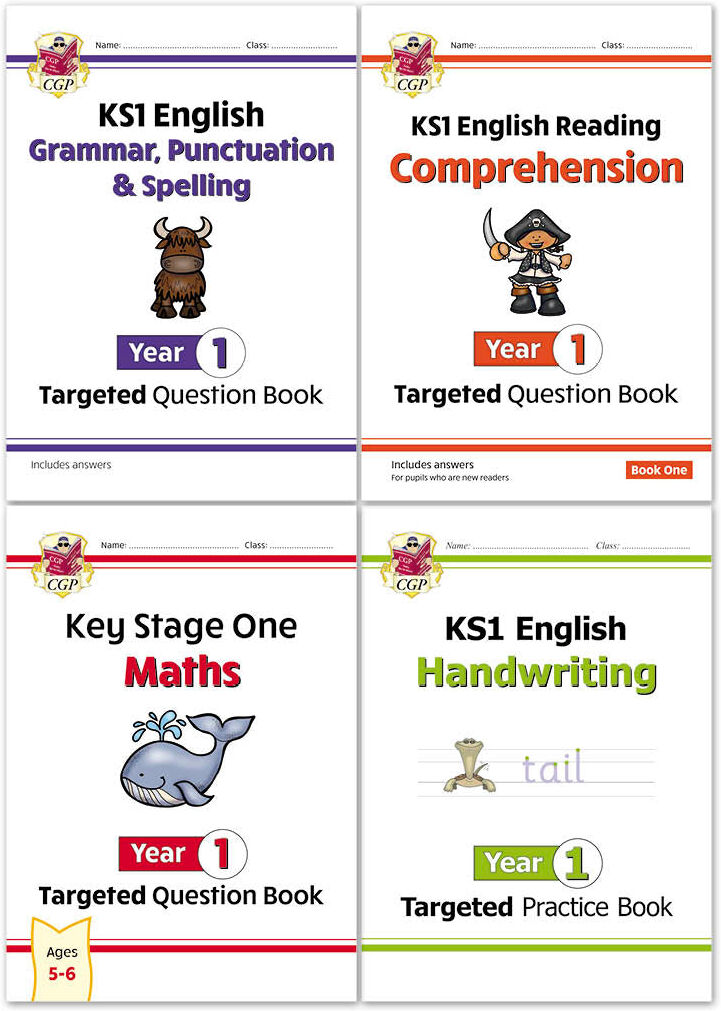
CGP Books CGP KS1 Year 1 Workbook Bundle – Ages 5-6 (Grammar Punctuation and Spelling, Reading Comprehension, Handwriting, Maths)You can't beat CGP books for fun Primary practice! This brilliant 4-book bundle is perfect for learning at home or in class! Each book is packed with questions and activities to help Year 1 kids build essential English and Maths skills. Year 1 Grammar, Punctuation & Spelling Targeted Question Book (with Answers) (9781782941910) Year 1 Reading Comprehension Targeted Question Book – Book 1 (with Answers) (9781782947585) Year 1 Handwriting Targeted Practice Book (9781782946953) Year 1 Maths Targeted Question Book (9781789089165) Year 1 Grammar, Punctuation & Spelling Targeted Question Book (with Answers) This smashing book is packed with engaging questions and activities to help build grammar, punctuation and spelling skills. It's targeted exactly at Year 1 pupils, and carefully matched to the latest National Curriculum. There are hints and examples throughout the book to help children get started, and tick-boxes to help them keep track of how confident they feel about each topic. What's more, fun puzzles are at the end of every section and complete answers are included at the back ― perfect for hassle-free marking. Year 1 Reading Comprehension Targeted Question Book – Book 1 (with Answers) Our brilliant Targeted Question Book 1 for Year 1 is perfect for pupils getting to grips with Reading Comprehension at Primary School. It's packed with a diverse variety of colourful, fun activities and texts, and there are extra challenges throughout for additional practice. All of the answers are included at the back of the book, and be sure to use the progress chart to record any tricky words pupils encounter! Year 1 Handwriting Targeted Practice Book This bright and cheerful Handwriting Practice Book from CGP is a fantastic way for Year 1 pupils (ages 5-6) to practise forming letters and writing words neatly. It starts off with lines and patterns to trace before moving onto letters. Each letter is introduced with helpful arrows to show how it’s formed. Pupils are then given letters to trace and space to write them independently as well, with guidelines to keep letters the same size and dots to show where to start each letter. They’re also given whole words and sentences to trace and copy. This book includes capital letters and numbers too, and a page of helpful handwriting tips. Year 1 Maths Targeted Question Book This bright, colourful book is a brilliant source of practice questions for Year 1 Maths pupils - all perfectly matched to the latest curriculum. It's packed with questions, with plenty of space on each page for answers and any working out. There are Warm-Up Questions to get pupils started, and the difficulty increases throughout each topic to help them progress. And there's more! We've included Objectives Tests at the start and end of the book, and Progress Tests to keep track of how pupils are getting on. You'll find answers to everything at the back.22,99 £*Shipping: 2,99 £Secure redirect to the provider
-
What does an interval indicate?
An interval indicates the range of values between two points on a number line. It shows all the numbers that fall within that range, including the endpoints. Intervals can be open, closed, half-open, or half-closed, depending on whether the endpoints are included in the set of values. They are commonly used in mathematics to describe sets of numbers or solutions to inequalities. **
-
What is meant by interval?
An interval in mathematics refers to a set of numbers that are within a specific range. It includes all the numbers between two given values, including the endpoints. For example, the interval [2, 5] includes all numbers from 2 to 5, including 2 and 5. Intervals can be open (excluding the endpoints), closed (including the endpoints), or half-open (including one endpoint but not the other). **
-
What is an open interval?
An open interval is a set of real numbers between two specified values, where the endpoints are not included in the interval. For example, the open interval (1, 5) includes all real numbers greater than 1 and less than 5, but does not include 1 or 5 themselves. Open intervals are denoted using parentheses to indicate that the endpoints are excluded. **
-
What is the confidence interval?
The confidence interval is a range of values that is likely to contain the true value of a population parameter. It is calculated from sample data and is used to estimate the precision of our sample estimate. The confidence level associated with the interval represents the probability that the interval will contain the true population parameter. A higher confidence level results in a wider confidence interval. **
* All prices are inclusive of VAT and, if applicable, plus shipping costs. The offer information is based on the details provided by the respective shop and is updated through automated processes. Real-time updates do not occur, so deviations can occur in individual cases. ** Note: Parts of this content were created by AI.